Top Per Head Sportsbooks in Sports Betting (2026)

The pay per head industry has transformed how bookmakers and agents operate in sports betting, offering sophisticated technology platforms that rival major commercial operators. Finding the right per head sportsbook platform can determine the success or failure of your wagering operation, impacting everything from customer retention to risk management and profitability. With dozens of providers claiming to offer the best solution in sports betting, distinguishing genuine value from marketing hype requires understanding what truly matters for US-based operations.
Top Per Head Sportsbooks in Sports Betting for 2026
Selecting the best per head platform in sports betting requires evaluating multiple factors: technological capability, customer support quality, pricing structure, and feature depth. The landscape has evolved significantly, with operators now expecting enterprise-grade functionality at competitive per-head rates.
Best Overall: PerHead Kings
Who It's Best For: Bookmakers seeking comprehensive technology with scalable infrastructure and professional-grade risk management tools.
PerHead Kings delivers a complete sportsbook software solution from their Costa Rica operations, supporting bookmakers and agents of all sizes across North America. Their platform excels in live wagering capabilities, offering real-time odds updates across major sports with sophisticated in-play betting features that meet regulatory standards including those outlined by the UK Gambling Commission's technical requirements.
Key Features:
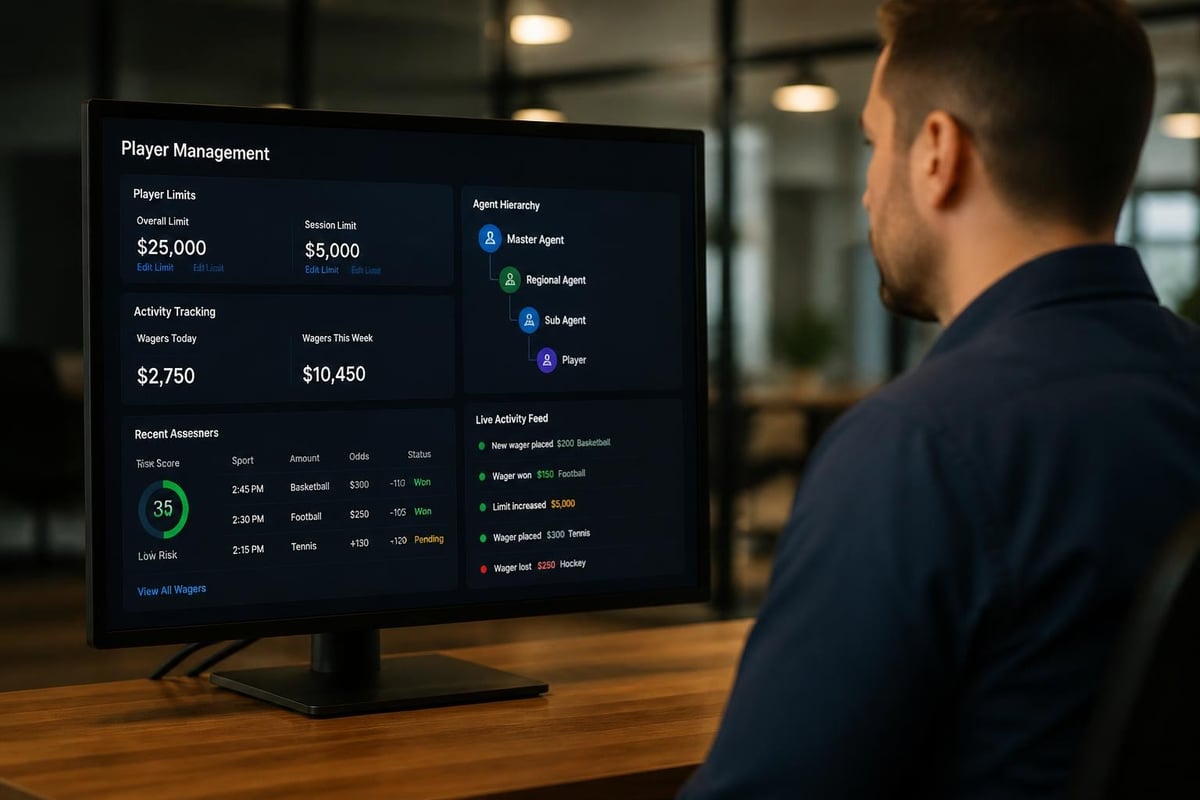
- Advanced player management with detailed tracking and limits
- Multi-tier agent hierarchies for complex operations
- Comprehensive risk management dashboard
- Live betting on 50+ sports and events
- Customizable interface and branding options
- Real-time reporting and analytics
- Mobile-optimized platform
Pricing Structure: Competitive per-head model with volume discounts and no hidden fees for standard features.
| Pros | Cons |
|---|---|
| Enterprise-level technology at PPH pricing | Learning curve for advanced features |
| 24/7 multilingual customer support | Requires minimum commitment period |
| Robust reporting and data analytics | Additional fees for certain premium modules |
| Proven track record with large operations | Integration setup requires technical coordination |
The platform integrates seamlessly with casino offerings, as operators can expand beyond traditional sports wagering. Platforms like 24-7 Casino demonstrate how diverse gaming portfolios enhance player retention, offering slots, live dealer games, and table games that complement sportsbook operations.
Best Value: Strategic PPH Solutions
Who It's Best For: New bookmakers and small-to-medium operations prioritizing cost efficiency without sacrificing essential functionality.
Value-oriented per head platforms in sports betting focus on delivering core features at aggressive price points. These solutions typically offer streamlined interfaces, essential risk management tools, and reliable uptime without the bells and whistles of premium platforms.
Essential Features Include:
- Basic player account management
- Standard sports coverage (major US leagues)
- Fundamental risk controls and limits
- Weekly settlement reporting
- Mobile access for players
- Email and phone support during business hours
Typical Pricing: Lower per-head rates, often with setup fees and tiered pricing based on active player counts.
The value segment works well for operations testing the market or focusing on specific geographic regions. However, limitations often appear in sports betting during high-volume periods, particularly for in-play wagering where technical infrastructure demands increase substantially. Research indicates that frequency of live sports betting features correlates with player engagement, making robust live wagering capability increasingly important even for budget-conscious operators.
Best for Live Wagering: Premium In-Play Solutions
Who It's Best For: Operations prioritizing in-play betting volume and requiring millisecond-accurate odds updates across multiple simultaneous events.
Live wagering represents the fastest-growing segment in sports betting, with operators reporting 40-60% of total handle coming from in-play markets during major sporting events. Premium platforms specialize in this demanding technical environment, offering infrastructure that handles thousands of odds changes per minute without latency issues.
Advanced Live Betting Capabilities:
- Real-Time Odds Engineering: Proprietary algorithms adjusting lines based on game flow
- Multi-Event Management: Simultaneous live markets across 20+ concurrent events
- Micro-Betting Options: Proposition bets on individual plays and possessions
- Automated Risk Controls: Intelligent limits adjusting based on exposure and patterns
- Stream Integration: Optional video feeds synchronized with betting interfaces
| Feature Category | Standard PPH | Premium Live Wagering |
|---|---|---|
| Live markets per game | 15-25 | 80-150+ |
| Odds update frequency | 10-30 seconds | Sub-second |
| Concurrent live events | 5-10 | 30+ |
| Automated suspensions | Basic | AI-powered |
| Mobile optimization | Good | Excellent |
Understanding player demographics matters significantly for mobile wagering operations, as research shows that certain player profiles engage more heavily with in-play betting, requiring platforms capable of supporting this behavior pattern while maintaining responsible gaming controls.
Best for Agent Networks: Multi-Tier Management Systems
Who It's Best For: Master agents and franchised operations requiring sophisticated agent hierarchies with commission tracking and sub-account management.
Complex agent structures demand specialized functionality in sports betting software. The best platforms for multi-tier operations provide granular control over permissions, automated commission calculations, and comprehensive reporting at every hierarchy level.
Critical Agent Management Features:
- Unlimited sub-agent creation with customizable permissions
- Automated commission calculations with adjustable percentage splits
- Independent credit limits and risk parameters per tier
- Consolidated reporting across entire agent tree
- White-label capability for sub-agents
- Player migration and transfer tools
Platforms supporting these advanced agent hierarchies enable master agents to scale operations efficiently, delegating management responsibilities while maintaining oversight. The software handles complex scenarios where individual agents require different sports offerings, betting limits, and juice structures for their specific markets.

Best for Customization: White Label and Turnkey Solutions
Who It's Best For: Operators building branded sportsbook experiences or entering new markets with established business identities.
White label sportsbook solutions allow operators to present fully branded experiences in sports betting while leveraging established technology infrastructure. These platforms offer maximum flexibility in visual presentation, betting rules, and customer-facing elements.
Customization Options Typically Include:
- Full branding control (logos, colors, typography)
- Custom domain and hosting arrangements
- Tailored betting rules and house limits
- Unique promotional tools and bonus structures
- Localized payment processing integration
- Proprietary player communication systems
The distinction between white label and standard PPH matters significantly. White label operators gain independence in market positioning and customer relationships, while traditional per head arrangements maintain provider branding and standardized interfaces. This autonomy comes at higher price points but delivers competitive advantages in markets where brand differentiation drives acquisition.
Feature Comparison Across Top Platforms
Understanding how different per head sportsbooks stack up requires examining specific functionality categories that impact daily operations in sports betting. Platform selection should align with operational priorities and growth strategies.
Risk Management and Trading Tools
Sophisticated risk management separates amateur operations from professional books in sports betting. The best platforms provide multiple layers of protection against sharp players and coordinated betting groups.
Essential Risk Controls:
- Real-time exposure monitoring across all markets
- Automated bet rejection based on configurable rules
- Player profiling and tagging systems
- Betting pattern detection and alerts
- Steam move protection and line movement tracking
- Manual override capabilities for traders
Modern platforms incorporate artificial intelligence to identify suspicious patterns, particularly important given documented concerns about match-fixing risks in betting markets. These systems flag unusual betting activity, enabling operators to investigate before exposure becomes problematic.
Sports and Market Coverage
Comprehensive sports coverage defines competitive advantage in sports betting. US-based operations require deep markets on American sports while maintaining international offerings for diverse player bases.
| Sport Category | Markets per Game (Average) | Live Betting Availability |
|---|---|---|
| NFL | 200-350 | Yes (extensive) |
| NBA | 180-280 | Yes (extensive) |
| MLB | 150-220 | Yes (moderate) |
| NHL | 120-180 | Yes (moderate) |
| College Football | 100-200 | Yes (selective) |
| College Basketball | 80-150 | Yes (selective) |
| Soccer (Major Leagues) | 150-250 | Yes (extensive) |
| Tennis | 80-120 | Yes (extensive) |
Leading platforms also support prop builder tools, enabling operators to create custom proposition bets and same-game parlays that drive player engagement. These features have become essential rather than optional, with proprietary props differentiating operations in competitive markets.

Reporting and Analytics Capabilities
Data-driven decision-making requires robust reporting infrastructure in sports betting operations. The best per head platforms deliver actionable intelligence through intuitive dashboards and customizable reports.
Critical Reporting Functions:
- Real-Time Profit and Loss: Live P&L tracking with drill-down by player, sport, and bet type
- Player Activity Analysis: Detailed wagering patterns, win rates, and lifetime value metrics
- Agent Performance Metrics: Commission tracking, player acquisition costs, and retention rates
- Risk Exposure Dashboards: Current liability across all markets with scenario modeling
- Custom Report Builder: Flexible tools for generating specific data views
Advanced data analytics capabilities enable operators to identify profitable player segments, optimize betting limits, and detect early warning signs of problem gambling behavior. Platforms offering API access for external analytics tools provide maximum flexibility for sophisticated operations.
Technical Infrastructure Considerations
Behind every successful per head sportsbook in sports betting lies robust technical infrastructure. Platform reliability, speed, and security determine whether operations scale smoothly or collapse under pressure.
Uptime and Performance Standards
Server reliability impacts revenue directly in sports betting. Downtime during major events costs bookmakers thousands in lost handle and damages customer trust permanently. Industry standards expect 99.9% uptime, translating to less than 45 minutes of downtime monthly.
Performance Benchmarks to Evaluate:
- Page load times under 2 seconds
- Bet confirmation processing under 1 second
- Odds update latency under 3 seconds
- Mobile app crash rate below 0.5%
- Peak capacity handling (Super Bowl, March Madness)
Top platforms maintain redundant infrastructure across multiple data centers, ensuring continuity during hardware failures or network issues. Costa Rica-based operations often benefit from favorable regulatory environments while maintaining connectivity to US markets.
Security and Player Protection
Data security and responsible gaming protections have become non-negotiable in sports betting. Operators face reputational and regulatory risks from security breaches or inadequate player safeguards.
Security Requirements:
- SSL encryption for all data transmission
- Secure payment processing integration
- Regular security audits and penetration testing
- DDoS protection and mitigation
- Secure credential management
- Regular backup and disaster recovery procedures
Equally important are responsible gaming practices embedded into platform functionality. Leading providers include deposit limits, self-exclusion tools, reality checks, and activity monitoring that flags potential problem gambling behavior. Industry data shows these protections benefit operators through reduced chargebacks and regulatory compliance.
Integration and Support Infrastructure
Successful deployment of per head technology in sports betting extends beyond software selection. Integration complexity, onboarding processes, and ongoing support determine operational success.
Implementation Timeline and Process
Understanding realistic implementation timelines prevents costly surprises during platform transitions. Most professional deployments follow structured phases spanning 2-6 weeks depending on complexity.
Typical Implementation Phases:
- Initial Configuration (3-5 days): Account setup, branding customization, sports selection
- Agent and Player Migration (5-10 days): Data transfer, account creation, balance reconciliation
- Testing and Training (3-7 days): Staff education, test wagering, process verification
- Soft Launch (1-2 weeks): Limited rollout with monitoring and adjustment
- Full Deployment: Complete transition with legacy system sunset
Operations can explore platform capabilities through demo requests before committing, allowing thorough evaluation of interface design, feature depth, and workflow compatibility.
Customer Support Quality and Availability
Technical issues require immediate resolution in sports betting, particularly during high-stakes events. Support quality varies dramatically across providers, impacting operational continuity and customer satisfaction.
Support Evaluation Criteria:
- Availability (24/7 vs. business hours)
- Response time commitments (guaranteed vs. best effort)
- Communication channels (phone, chat, email, ticket system)
- Technical expertise level of support staff
- Escalation procedures for critical issues
- Account management and strategic consultation
Premium platforms assign dedicated account managers who understand operational specifics and provide proactive guidance. This customer support infrastructure becomes increasingly valuable as operations scale and complexity increases.
Pricing Models and Total Cost of Ownership
Understanding true platform costs in sports betting requires looking beyond advertised per-head rates. Hidden fees, volume thresholds, and feature restrictions significantly impact profitability.
Common Pricing Structures
Per head sportsbooks typically employ one of several pricing models, each with advantages and limitations depending on operational characteristics.
Prevalent Pricing Approaches:
- Fixed Per Head: Flat weekly rate per active player regardless of action
- Tiered Per Head: Declining rates as active player counts increase
- Revenue Share: Percentage of gross gaming revenue instead of per-head fees
- Hybrid Models: Combination of base per-head rate plus revenue share
- Package Pricing: All-inclusive monthly fees with player count caps
| Pricing Model | Best For | Typical Cost Range | Hidden Fee Risk |
|---|---|---|---|
| Fixed Per Head | Stable player counts | $8-15/player/week | Low |
| Tiered Per Head | Growing operations | $5-12/player/week | Moderate |
| Revenue Share | Volatile handle | 15-25% of GGR | Low |
| Hybrid | Large operations | Varies widely | High |
| Package | Small books | $500-2000/month | Moderate |
Operators should scrutinize contracts for setup fees, minimum player requirements, overage charges, and premium feature costs. Many platforms advertise attractive base rates while charging separately for essential functionality like live betting, custom reports, or white label access.
Calculating Return on Investment
Platform selection in sports betting should follow rigorous ROI analysis considering both direct costs and operational efficiency gains. Better technology often justifies higher fees through improved margins and player retention.
ROI Calculation Factors:
- Player Acquisition Costs: Lower with superior mobile experience and feature set
- Retention Rates: Better platforms reduce player churn significantly
- Hold Percentage: Advanced risk tools improve theoretical hold realization
- Operational Efficiency: Time saved on manual processes and issue resolution
- Scalability Costs: Investment required to support growth phases
Operations averaging 100 active players weekly might pay $10 per head ($1,000 weekly) for a premium platform versus $6 per head ($600 weekly) for a basic solution. If the premium platform improves hold percentage by 2% on $100,000 weekly handle, the additional $400 generates $2,000 in extra margin, creating a 5x return on technology investment.
Market Trends Shaping Per Head Solutions
Understanding where the industry moves in sports betting helps operators select platforms positioned for future requirements rather than yesterday's standards. Several trends are reshaping the competitive landscape.
Mobile-First Development
Smartphone wagering now dominates in sports betting, with many operations reporting 70-80% of handle originating from mobile devices. Platforms designed mobile-first rather than adapted from desktop architecture deliver superior user experiences.
The European Gaming and Betting Association reports that mobile betting growth continues outpacing desktop across all demographics, with in-play betting particularly popular on mobile devices. This data underscores the importance of selecting platforms with native mobile applications rather than responsive web interfaces alone.
Regulatory Compliance Evolution
As more US states legalize sports wagering, compliance requirements increasingly impact offshore per head operations serving American customers. Forward-thinking platforms build regulatory-friendly features anticipating future requirements.
Emerging Compliance Features:
- Geolocation verification and IP blocking
- Enhanced identity verification systems
- Automated responsible gaming interventions
- Detailed audit trails for regulatory review
- Segregated player funds management
- Tax reporting and documentation tools
Operators should evaluate whether platforms provide flexibility to adapt to changing regulatory landscapes without requiring complete system replacements. Understanding regulatory challenges in betting markets helps operators make informed technology decisions.
Artificial Intelligence Integration
Machine learning and AI technologies are transforming risk management, customer service, and odds compilation in sports betting. Leading platforms incorporate these capabilities as standard features rather than expensive add-ons.
AI applications include automated odds adjustments based on betting patterns, chatbot customer support handling common inquiries, predictive models identifying high-value players, and fraud detection systems flagging suspicious activity. These technologies improve margins while reducing operational overhead.
Evaluating Providers Before Commitment
Thorough due diligence prevents costly mistakes when selecting per head technology in sports betting. Operators should follow structured evaluation processes before signing contracts.
Essential Questions for Providers
Technology and Features:
- What is your platform uptime percentage over the past 12 months?
- How many concurrent users can your infrastructure support?
- What is your odds update frequency for live betting markets?
- Do you offer proprietary risk management tools or third-party integrations?
- What customization options exist for betting rules and limits?
Business Terms:
- What is your total pricing including all fees and charges?
- Are there minimum player commitments or contract lengths?
- What notice period is required for service termination?
- How do you handle dispute resolution between operator and provider?
- What happens to player data if we terminate service?
Support and Reliability:
- What are your guaranteed response times for technical issues?
- Is support available 24/7 or during specific hours?
- Do you provide dedicated account management?
- What training and onboarding support is included?
- Can you provide references from similar-sized operations?
Trial Periods and Demo Access
Reputable providers offer demonstration access allowing operators to evaluate functionality before committing. Testing should involve actual betting scenarios, administrative workflows, and reporting capabilities rather than superficial feature tours.
Comprehensive platform evaluation through hands-on testing reveals usability issues, performance limitations, and workflow friction that marketing materials never disclose. The future of sports betting increasingly demands sophisticated technology, making thorough evaluation essential for long-term competitiveness.
Selecting the right per head sportsbook platform fundamentally impacts operational success in sports betting, influencing everything from player acquisition to risk management and profitability. The best solution balances technological sophistication with cost efficiency while providing scalability for future growth. Whether you're launching a new operation or upgrading from an outdated platform, PerHead Kings delivers enterprise-grade sportsbook technology with comprehensive support, competitive pricing, and proven reliability for bookmakers and agents across North America. Request a demo to explore how our platform can elevate your sports betting operation.
More Articles
Get the insight into the trending topics and latest action in the industry.


Sign Up Now
This is the day your business becomes elite!