Top Pay Per Head Sportsbook Solutions 2026

The competitive landscape of sports wagering has transformed dramatically, with bookmakers seeking sophisticated technology platforms that scale efficiently without massive upfront investment. A pay per head sportsbook solution delivers enterprise-grade betting software on a subscription basis, charging operators only for active players rather than requiring expensive infrastructure builds. This model has become the cornerstone for thousands of independent bookmakers, agents, and gaming operators across the United States who need professional-grade tools to compete with major licensed operators.
Modern platforms combine comprehensive player management, real-time risk controls, customizable wagering interfaces, and integrated casino gaming into unified systems that support operations from solo agents managing dozens of bettors to multi-tiered organizations overseeing thousands. Understanding which pay per head sportsbook platform delivers the best value, features, and reliability for your specific operation requires examining key differentiators across pricing models, feature depth, customization options, and operational support.
Top Pay Per Head Sportsbook Platforms in the US
Selecting the right platform determines whether your operation thrives or struggles against competition. The best pay per head sportsbook providers deliver far more than basic betting software-they offer complete business ecosystems with marketing tools, payment processing integration, customer service infrastructure, and ongoing platform development that keeps pace with industry innovation.
Best Overall: PerHead Kings
PerHead Kings stands out as the premier choice for bookmakers seeking comprehensive functionality paired with exceptional reliability. Based in Costa Rica with a proven track record serving operators worldwide, the platform delivers institutional-grade tools wrapped in an intuitive interface that scales from startup agents to established multi-level operations.
Key Strengths:
- Complete agent hierarchy management with unlimited sub-agent tiers and granular permission controls
- Advanced risk management tools including automatic bet flagging, exposure monitoring, and customizable betting limits
- Full-spectrum wagering options covering major sports, live betting, props, futures, and integrated casino gaming
- Mobile-optimized player interfaces that deliver seamless experiences across iOS, Android, and web platforms
- Real-time reporting dashboards providing instant visibility into player activity, profit/loss, and exposure metrics
| Feature Category | Capability Level | Notes |
|---|---|---|
| Player Management | Enterprise-grade | Unlimited players, custom limits, automated alerts |
| Live Betting | Full coverage | Real-time odds, in-play props, live streaming integration |
| Risk Controls | Advanced | Auto-flagging, exposure caps, bet approval workflows |
| Customization | Extensive | White-label branding, custom bet types, interface personalization |
| Payment Integration | Multiple options | Major processors, cryptocurrency, alternative methods |
Best for: Mid-sized to large operations requiring sophisticated risk management and multi-agent structures, as well as startups planning aggressive growth trajectories.
Pricing structure: Competitive per-head rates with volume discounts and no hidden setup fees. Transparent pricing scales with active player counts rather than penalizing growth.
The comprehensive betting solutions offered through the platform include everything from traditional straight bets to complex parlays and custom proposition builders that keep players engaged across multiple betting angles.
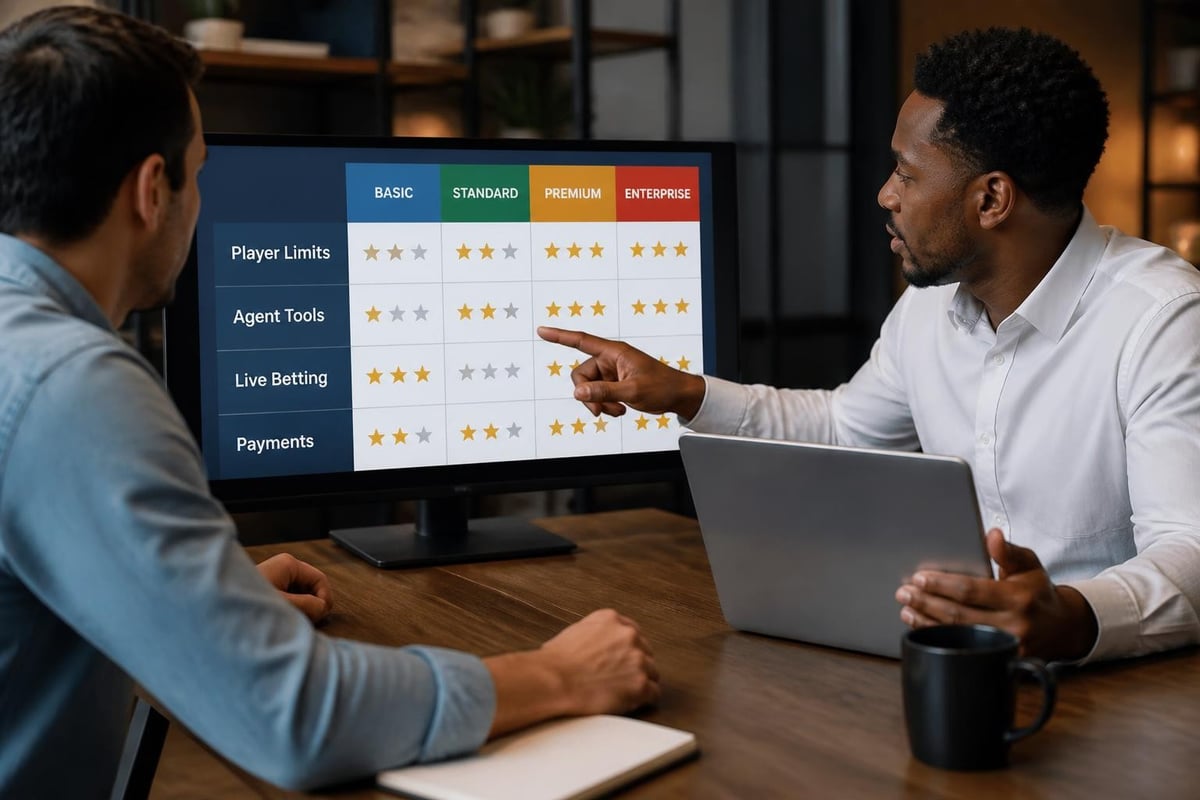
Best Value Platform Architecture
Understanding what constitutes genuine value in a pay per head sportsbook requires looking beyond headline pricing. The lowest per-head fee often masks limitations in features, customer service quality, or system reliability that ultimately cost operators more through lost wagers, player churn, or operational inefficiencies.
Essential Value Components:
- Included features without add-on fees (casino games, live betting, mobile access, basic reporting)
- Responsive 24/7 technical support that resolves issues before they impact player experience
- Regular platform updates delivering new bet types, sports coverage, and interface improvements
- Reliable uptime guarantees backed by redundant infrastructure and disaster recovery systems
- Transparent pricing with no surprise charges for standard operational needs
Top platforms include comprehensive toolsets in base pricing rather than nickel-and-diming operators for essential functionality. When evaluating sportsbook solutions, operators should calculate total cost of ownership including all required features rather than comparing headline per-head rates in isolation.
Superior Live Betting Integration
Live wagering represents the fastest-growing segment of sports betting activity, with in-play wagers accounting for significant percentages of overall handle at major operators. A pay per head sportsbook must deliver real-time odds updates, minimal latency, and comprehensive prop builder tools to capture this lucrative market segment.
Critical Live Betting Features:
- Sub-second odds updates synchronized with actual game action
- Extensive in-play markets covering major and secondary betting angles as events unfold
- Automated bet acceptance rules that protect operators while maximizing action
- Live statistics integration providing players contextual data for informed wagering decisions
- Streaming video compatibility when paired with licensed content providers
Platforms that excel in live betting employ sophisticated algorithms to adjust odds based on game flow while managing operator exposure through intelligent limit adjustments and automated risk protocols. The mobile wagering experience becomes particularly critical for live betting, as players increasingly place in-play wagers from mobile devices rather than desktop computers.
Essential Platform Features by Category
Different operational priorities require distinct platform capabilities. Breaking down pay per head sportsbook features by functional category helps operators identify which platforms align with their specific business models and growth strategies.
Player Management and User Experience
The player-facing interface determines retention rates and betting frequency more than any other factor. Professional platforms deliver clean, intuitive experiences that work flawlessly across devices while providing the information players need to make confident wagers.
Top-tier player features include:
- One-click bet placement with instant confirmation
- Comprehensive bet history and account statement access
- Customizable notifications for bet results and promotional offers
- Quick deposit and withdrawal processing through multiple payment methods
- Responsive customer support via chat, email, and phone channels
Understanding sports bettors and their behavioral patterns allows sophisticated platforms to personalize interfaces, highlight relevant betting opportunities, and deliver targeted promotions that increase player lifetime value without aggressive marketing spend.
Agent and Multi-Tier Management
Operators running downline structures require robust hierarchical management tools that track performance across multiple agent levels while maintaining clean separation of accounts, limits, and profit sharing arrangements.
| Management Function | Required Capability | Business Impact |
|---|---|---|
| Sub-agent creation | Unlimited tiers with custom permissions | Scale through recruitment |
| Commission automation | Configurable profit splits with automatic calculation | Reduce administrative overhead |
| Exposure isolation | Separate limits and risk across agent branches | Protect overall operation |
| Performance tracking | Real-time dashboards showing agent productivity | Identify top performers |
| White-label options | Agent-branded player interfaces | Enhance downline autonomy |
Advanced platforms allow parent agents to grant varying permission levels to downline operators-some may only view their own players while others receive full management capabilities within defined parameters. This flexibility supports diverse organizational structures from tightly controlled operations to decentralized networks with significant agent autonomy.

Risk Management and Betting Controls
Protecting the book represents the primary challenge for any sportsbook operator. Professional pay per head sportsbook platforms provide sophisticated risk management tools that flag suspicious betting patterns, manage exposure across correlated outcomes, and automate limit adjustments based on player history.
Essential risk controls:
- Automatic bet flagging based on configurable rules (sharp money indicators, unusual bet sizes, correlated parlays)
- Real-time exposure monitoring showing total liability across all outcomes in upcoming events
- Flexible limit management with player-specific maximums, sport-specific caps, and bet-type restrictions
- Approval workflows allowing manual review of flagged wagers before acceptance
- Historical pattern analysis identifying consistent winners requiring limit reductions
Compliance obligations vary by jurisdiction, but responsible operators implement player protection measures regardless of regulatory requirements. Sophisticated platforms include deposit limits, self-exclusion tools, and activity monitoring that helps identify problem gambling patterns before they escalate.
Technical Infrastructure and Reliability Considerations
Platform stability directly impacts revenue-every minute of downtime during major sporting events translates to lost wagers and frustrated players who may migrate to competitors. Evaluating the technical foundation of a pay per head sportsbook requires understanding redundancy systems, disaster recovery capabilities, and historical uptime performance.
Server Infrastructure and Geographic Distribution
Top providers operate multiple data centers across different geographic regions, ensuring service continuity even during localized outages. Content delivery networks (CDNs) reduce latency for players worldwide while load balancing distributes traffic across server clusters to prevent performance degradation during peak betting windows.
Key infrastructure elements:
- Redundant server arrays with automatic failover to backup systems
- Geographic distribution eliminating single points of failure
- DDoS protection defending against malicious traffic attacks
- Scalable architecture that handles traffic spikes during major events
- Regular backup protocols protecting data against corruption or loss
Operators should verify third-party service provider credentials when evaluating platforms, particularly regarding payment processing security and data protection standards. PCI DSS compliance becomes mandatory when handling card transactions, requiring specific technical controls and regular security audits.
Payment Processing and Financial Controls
Seamless payment operations separate professional platforms from amateur offerings. Players expect instant deposits and rapid withdrawals through their preferred payment methods, while operators need robust accounting tools that track every transaction across complex multi-agent structures.
Modern platforms integrate diverse payment processors supporting credit cards, e-wallets, cryptocurrency, and bank transfers. Understanding payment processor relationships becomes increasingly important as financial institutions scrutinize gaming-related transactions under enhanced due diligence protocols.
Payment system requirements:
- Multiple processor integration providing backup options if primary services fail
- Automated reconciliation matching player accounts to processor settlements
- Configurable withdrawal approval workflows protecting against fraud
- Cryptocurrency wallet integration for privacy-conscious players
- Detailed transaction histories supporting audit and tax compliance needs
Research indicates that player payment preferences continue evolving, with younger demographics showing strong preference for alternative payment methods including cryptocurrency and e-wallets over traditional card transactions.

Customization and Branding Options
Generic interfaces limit operator differentiation in increasingly competitive markets. Leading pay per head sportsbook platforms offer extensive white-label customization allowing bookmakers to create branded experiences that reflect their unique market positioning and appeal to target player demographics.
Interface Personalization
Beyond basic logo placement, sophisticated customization includes color schemes, layout modifications, featured betting markets, promotional banner placements, and custom content integration. Operators can highlight specific sports or bet types aligned with their player base preferences while de-emphasizing less popular markets.
Customization dimensions:
- Complete visual branding matching existing website or marketing materials
- Custom domain hosting presenting the platform as proprietary technology
- Personalized betting menus prioritizing relevant sports and markets
- Tailored promotional messaging and bonus structure presentation
- Language localization for multilingual player bases
The white-label sportsbook approach allows operators to present professional platforms under their own brand identity without revealing the underlying technology provider to players.
Betting Market Configuration
Different player populations show distinct preferences for bet types, sports coverage, and wagering styles. Professional platforms allow operators to configure available markets, adjust juice on standard lines, create custom proposition bets, and introduce unique betting angles that differentiate their offering from competitor books.
Advanced prop builder tools enable creation of custom same-game parlays and specialty wagers that attract recreational bettors seeking entertainment value beyond straight-up outcomes. These tools often generate higher hold percentages while increasing player engagement through personalized betting experiences.
Integration Capabilities and Ecosystem Expansion
Modern pay per head sportsbook operations extend beyond core betting functionality to encompass casino gaming, racebook wagering, esports betting, and emerging verticals. Platform integration capabilities determine how easily operators can add revenue streams and respond to evolving player preferences.
Casino and Gaming Integration
Full-service platforms include integrated casino gaming with slots, table games, and live dealer experiences that provide additional player entertainment beyond sports wagering. This diversification reduces seasonal volatility inherent in sports-only operations while capturing recreational players seeking variety.
Cross-platform account integration allows seamless fund transfers between sportsbook and casino balances, unified promotional campaigns spanning both verticals, and consolidated reporting showing complete player profitability across all wagering activities. For operators exploring diverse offerings, platforms like AiPLAY demonstrate how engaging entertainment experiences keep players active across multiple gaming categories.
Integration benefits:
- Revenue diversification reducing dependence on sports betting cycles
- Enhanced player retention through varied entertainment options
- Cross-promotional opportunities introducing sports bettors to casino games
- Simplified operations managing all products through unified platform
- Consolidated reporting showing complete player lifetime value
Regional markets show varying preferences, with platforms serving Asian markets often integrating popular regional games. Solutions like AiPLAY MY illustrate how localized gaming content resonates with specific demographic segments seeking culturally relevant entertainment experiences.
Third-Party Data and Content Feeds
Professional odds compilation requires access to reliable data feeds covering game scores, injury reports, weather conditions, and other factors affecting betting lines. Leading platforms maintain relationships with premium data providers ensuring accurate, timely information that supports both odds-making and player information needs.
Industry security standards emphasize the importance of validated third-party data sources and secure integration protocols protecting against data manipulation or unauthorized access. Operators should verify that platforms implement appropriate controls when integrating external feeds.
Support Infrastructure and Operational Assistance
Technology platforms represent only one component of successful sportsbook operations. The best pay per head sportsbook providers deliver comprehensive support ecosystems including customer service, technical assistance, odds consultation, and strategic guidance helping operators optimize their businesses.
Multi-Channel Support Systems
Professional platforms staff 24/7 support teams handling both operator questions and direct player assistance when configured for full-service operation. Response times, knowledge depth, and issue resolution effectiveness separate premium providers from budget alternatives that leave operators struggling with technical problems during critical betting windows.
Support channel availability:
- Live chat with instant response for urgent technical issues
- Phone support staffed by knowledgeable representatives
- Email ticketing systems for non-urgent questions and detailed inquiries
- Comprehensive knowledge bases and video tutorials for self-service
- Dedicated account management for high-volume operators
Beyond reactive support, leading providers offer proactive assistance including sports betting marketing strategies consultation, player acquisition tactics, and operational best practices drawn from successful operators across their platform ecosystems.
Odds Consultation and Line Setting
Many operators lack the expertise or resources to set accurate betting lines across hundreds of daily markets. Premium platforms offer odds consultation services providing professionally-set lines across all major sports, props, and futures markets while allowing operator adjustments reflecting their specific exposure and player tendencies.
This hybrid approach combines institutional-grade line origination with local market customization, protecting operators from sharp betting syndicates while maintaining flexibility to shade numbers based on known player biases. Understanding when to follow market consensus versus adjusting for proprietary information separates profitable operations from those steadily losing to informed bettors.
Regulatory Compliance and Responsible Gaming
The evolving regulatory landscape creates compliance challenges for operators across jurisdictions. While many pay per head sportsbook providers operate from offshore locations, responsible platforms implement player protection measures, data security protocols, and operational transparency that align with international best practices regardless of specific licensing requirements.
Player Protection Measures
Implementing responsible gaming tools protects both players and operators from the negative consequences of problem gambling. Modern platforms include deposit limits, loss limits, session time restrictions, self-exclusion capabilities, and activity pattern monitoring that flags potentially harmful behavior.
Operators must understand their responsibilities for third parties particularly when platforms provide direct player interaction through customer service or account management functions. Clear contractual definitions of roles and obligations protect all parties while ensuring consistent player experiences.
Public health perspectives on gambling continue evolving, with increased focus on technology-enabled harm minimization. Forward-thinking platforms incorporate research-based interventions including behavioral analytics, personalized risk assessments, and intervention protocols that balance business objectives with player welfare.
Data Security and Privacy Protections
Player data represents both a valuable business asset and significant liability if improperly secured. Professional platforms implement enterprise-grade security including encrypted data transmission, secure credential storage, regular security audits, and intrusion detection systems protecting against unauthorized access.
Financial institutions increasingly scrutinize internet gambling-related commercial customers when evaluating banking relationships and payment processing partnerships. Operators benefit when platforms maintain certifications, undergo third-party audits, and demonstrate commitment to security best practices that satisfy enhanced due diligence requirements.
Scalability and Growth Support
Startup operations have vastly different needs than established multi-agent organizations processing thousands of daily wagers. The best pay per head sportsbook platforms accommodate operators across this spectrum, providing entry-level simplicity that scales seamlessly as businesses grow without requiring platform migrations or painful data transfers.
Flexible Pricing Structures
Volume-based pricing rewards growth while making platforms accessible to new operators. Typical structures charge per active player per week, with rates declining as player counts increase. Some providers offer hybrid models combining base platform fees with per-player charges, while others include setup fees, minimum monthly commitments, or charges for premium features.
Pricing model comparison:
| Model Type | Structure | Best For |
|---|---|---|
| Pure per-head | $X per active player weekly | Startups, variable volume |
| Tiered per-head | Declining rates at volume thresholds | Growing operations |
| Hybrid base + per-head | Monthly platform fee + player charges | Stable, predictable operations |
| Feature-based | Base rate + add-on modules | Operators needing specific tools |
Transparent pricing without hidden fees allows accurate cost forecasting and profit margin calculation. Operators should clarify exactly what "active player" means (players with settled bets, players with any activity, players with account balances) as definitions vary across providers and significantly impact actual costs.
Infrastructure That Grows With Operations
Technical architecture must support growth from dozens to thousands of concurrent users without performance degradation. Cloud-based platforms scale computational resources dynamically during peak demand periods, ensuring consistent response times whether handling 100 simultaneous players or 10,000.
Database architecture affects reporting speed and analytical capabilities as operations grow. Modern platforms employ optimized data structures supporting real-time queries across millions of historical bets without the lag that plagues legacy systems attempting to generate complex reports from massive datasets.
Selecting the right pay per head sportsbook platform determines operational success, player satisfaction, and long-term profitability in an increasingly competitive market. Modern solutions combine sophisticated risk management, seamless player experiences, and comprehensive support infrastructure that allows bookmakers to focus on growing their businesses rather than managing technical complexity. Whether you're launching a new operation or seeking to upgrade from an underperforming platform, PerHead Kings delivers the enterprise-grade tools, reliability, and support that professional bookmakers require to compete effectively in 2026 and beyond.
More Articles
Get the insight into the trending topics and latest action in the industry.


Sign Up Now
This is the day your business becomes elite!